By Denise Calder December 15, 2025
For many businesses, credit card fees feel like a fixed cost that cannot be changed. Every sale comes with deductions, and most merchants accept those fees as the price of doing business. However, what many do not realize is that the amount paid in interchange is not always final. The level of transaction data provided during payment processing plays a major role in determining interchange rates. Level 2 and Level 3 processing were introduced specifically to reward businesses that submit more detailed transaction data. When used correctly, they can significantly reduce processing costs, especially for B2B and B2G transactions. Understanding how these levels work is essential for businesses that want to optimize their payment processing strategy and keep more revenue from every sale.
At its core, interchange optimization is about lowering risk for card networks. The more information a merchant provides, the more confident the card issuer becomes about the transaction’s legitimacy. This confidence translates into lower interchange rates. Businesses that rely on standard credit card processing often qualify only for Level 1 data, which offers the least amount of detail and the highest interchange cost. By moving into Level 2 processing or Level 3 processing, merchants unlock better pricing structures.
Understanding Interchange in Payment Processing
Interchange is the fee paid by the merchant’s acquiring bank to the cardholder’s issuing bank for processing a credit card transaction. It is the largest component of credit card processing costs and is set by card networks like Visa and Mastercard. Interchange rates vary based on factors such as card type, transaction method, risk level, and the amount of data provided. For many businesses, interchange feels invisible because it is bundled into a single processing rate, but it directly affects profitability on every transaction.
In payment processing, interchange exists to compensate issuing banks for risk, fraud prevention, and the extension of credit to cardholders. Transactions that appear riskier carry higher interchange costs, while transactions that offer transparency and traceability are rewarded with lower rates. Merchant services providers pass these fees through to businesses, sometimes with markup depending on pricing models. This is why understanding interchange is critical for any business that wants to reduce credit card processing expenses. By focusing on the quality of data submitted rather than just transaction volume, merchants can actively influence how much they pay.
What Is Level 1 Data and Why It Costs More
Level 1 data is the most basic information submitted during a credit card transaction. It includes the transaction amount, the merchant name, the card number, and the date. This is the default data level for most retail and consumer transactions. While it is sufficient for basic authorization, it provides very little insight into what was purchased or why the transaction occurred. From the perspective of the issuing bank, this lack of detail increases uncertainty.
Because Level 1 transactions offer limited transparency, they are considered higher risk. This leads to higher interchange rates compared to transactions that provide more context. Many small businesses unknowingly remain locked into Level 1 processing even when they could qualify for lower rates. The reason is often a lack of awareness or outdated systems that do not support enhanced data capture. In today’s competitive environment, relying solely on Level 1 credit card processing can quietly erode margins, especially for businesses with large ticket sizes or frequent transactions.
Level 2 Processing Explained
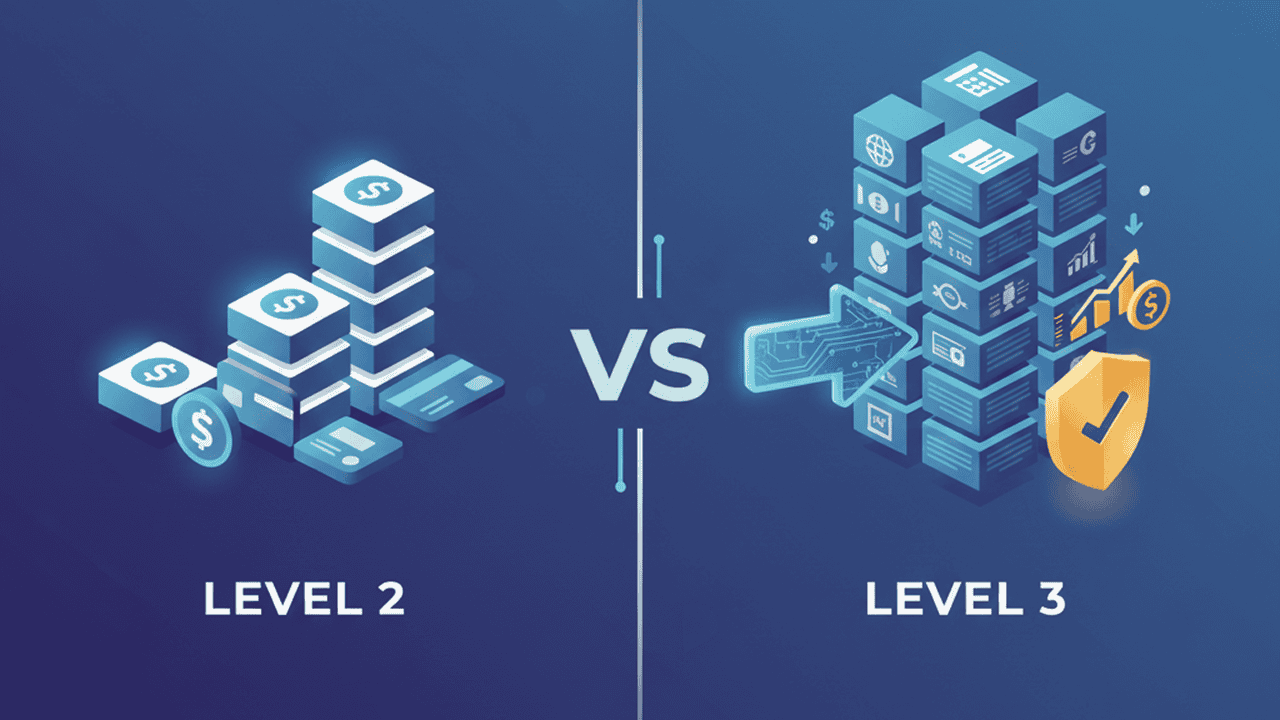
Level 2 processing builds on Level 1 data by adding more transaction details. In addition to the basic fields, Level 2 includes tax amount, customer reference information, and in some cases sales tax indicators or invoice numbers. This extra data gives issuing banks more confidence in the legitimacy and structure of the transaction. As a result, transactions that qualify for Level 2 processing are often eligible for reduced interchange rates.
Level 2 processing is commonly used in B2B payments and government related transactions, but it is also applicable to many commercial transactions where invoices and tax details are available. Not all cards qualify for Level 2 rates, and not all merchant services providers support Level 2 data submission by default. However, when implemented correctly, Level 2 processing can lead to noticeable savings in payment processing costs. Businesses that bill other businesses, process large orders, or include tax in their transactions are often well positioned to benefit from Level 2 data.
Level 3 Processing and Why It Offers the Lowest Interchange
Level 3 processing takes data transparency to the highest level by including detailed line item information for each transaction. In addition to Level 2 fields, Level 3 processing captures product descriptions, item quantities, unit costs, commodity codes, and freight or duty amounts when applicable. This depth of information significantly reduces uncertainty for issuing banks, which is why Level 3 processing offers the lowest interchange rates available for credit card transactions.
Level 3 processing is especially valuable for B2B payments, wholesale transactions, and corporate purchasing environments. It allows card issuers to clearly understand what was purchased and how the transaction aligns with business spending policies. Because of the detailed reporting, Level 3 transactions are considered low risk and highly traceable. For merchants processing large invoices or repeat commercial transactions, the cost savings from Level 3 processing can be substantial. However, capturing Level 3 data requires the right technology and workflows, which many businesses must intentionally implement.
How Level 2 and Level 3 Data Reduce Interchange
The primary reason Level 2 and Level 3 data lower interchange is risk reduction. Issuing banks use transaction data to assess fraud potential, compliance, and spending legitimacy. When transactions include invoice numbers, tax breakdowns, and itemized details, they become easier to audit and verify. This transparency reduces disputes, chargebacks, and fraud claims, which lowers operational risk for card issuers.
Interchange optimization occurs because card networks reward this reduced risk with lower rates. Instead of charging higher fees to offset uncertainty, issuers can confidently approve transactions with less reserve for loss. This benefit is passed down to merchants who submit enhanced data. In practical terms, businesses that move from Level 1 to Level 2 or Level 3 processing often see lower effective processing rates without changing providers. The key is understanding which data fields are required and ensuring they are captured consistently during credit card processing.
Which Businesses Benefit Most From Level 2 and Level 3 Processing
Businesses involved in B2B payments benefit the most from enhanced data levels. Companies that issue invoices, charge sales tax, or sell multiple line items are strong candidates for Level 2 and Level 3 processing. This includes wholesalers, manufacturers, distributors, software vendors, professional services firms, and suppliers that sell to corporate or government entities. These transactions naturally involve detailed documentation, making it easier to capture the required data.
However, other businesses can also benefit. Some ecommerce merchants, healthcare providers, and service based companies qualify for Level 2 processing when they include tax and reference data. The key factor is whether the transaction involves a commercial card rather than a consumer card. Merchant services providers can help identify which portion of a business’s transactions are eligible for enhanced data rates. By focusing on those transactions, businesses can gradually reduce their average interchange cost without disrupting existing workflows.
Capturing Level 2 and Level 3 Data Through Technology
Capturing enhanced transaction data requires the right payment processing infrastructure. Not all terminals, gateways, or POS systems support Level 2 or Level 3 data by default. Businesses often need to configure their systems to prompt for additional fields such as tax amount, invoice number, or line item details. In many cases, software updates or integrations are required to enable this functionality.
For ecommerce and invoicing platforms, Level 3 data capture is often built into advanced payment gateways. These systems automatically pass itemized transaction details to the processor during authorization. For in person transactions, capturing Level 2 data may require manual entry of tax or reference numbers at checkout. While this adds a small step to the process, the long term savings in credit card processing fees often outweigh the effort. Investing in the right technology is a critical step in interchange optimization.
The Role of Merchant Services Providers in Data Optimization

Merchant services providers play a crucial role in enabling Level 2 and Level 3 processing. Not all providers actively promote or support enhanced data programs, even though they are available through card networks. Some providers bundle rates in a way that hides interchange savings, reducing transparency for merchants. Businesses serious about interchange optimization should work with providers that offer detailed reporting and support for advanced data submission.
A knowledgeable merchant services partner can audit transaction data, identify eligibility for Level 2 or Level 3 rates, and recommend system improvements. They can also ensure that data is submitted correctly to avoid downgrades, which occur when required fields are missing or incomplete. Downgrades can actually increase interchange costs, negating potential savings. Ongoing monitoring and optimization are essential for maintaining lower rates over time.
Common Challenges When Implementing Level 3 Processing
Despite its benefits, Level 3 processing comes with challenges. One of the most common issues is incomplete data capture. If even one required field is missing, the transaction may downgrade to Level 1 or Level 2, resulting in higher interchange. This makes consistency critical. Businesses must ensure that all line item details are captured accurately for every eligible transaction.
Another challenge is staff training and workflow design. Employees must understand why additional data is required and how to enter it correctly. Poorly designed systems can slow down checkout or create frustration for staff and customers. Businesses should aim to automate data capture wherever possible rather than relying on manual entry. With proper planning and system integration, these challenges can be minimized, allowing businesses to benefit fully from Level 3 processing.
How Level 3 Processing Supports Long Term Cost Control
Level 3 processing is not just about short term savings. It supports long term cost control by aligning payment processing costs with transaction risk. As businesses grow and transaction volume increases, even small reductions in interchange can lead to significant annual savings. These savings can be reinvested into technology, staffing, or expansion efforts.
In competitive markets, controlling operational costs is essential for sustainability. Credit card processing is one of the few expense categories where businesses can reduce costs without sacrificing service quality. By capturing Level 2 and Level 3 data, merchants create a scalable cost reduction strategy that grows alongside their revenue. Over time, this approach strengthens financial stability and improves margins across the business.
Monitoring Performance and Avoiding Downgrades

Once Level 2 or Level 3 processing is implemented, ongoing monitoring is essential. Businesses should regularly review processing statements to confirm that transactions are qualifying at the intended data level. Downgrades often occur silently, increasing costs without obvious warning. Regular audits help identify issues such as missing tax data, incorrect formatting, or unsupported card types.
Merchant services providers can offer reporting tools that show interchange categories and qualification rates. These insights allow businesses to fine tune their processes and maintain consistent savings. Monitoring also helps identify opportunities to expand enhanced data capture to additional transaction types. Interchange optimization is not a one time effort but an ongoing process that rewards attention and consistency.
The Future of Enhanced Data in Credit Card Processing
As payment processing continues to evolve, data transparency is becoming increasingly important. Card networks and issuing banks are placing greater emphasis on traceability, compliance, and fraud prevention. This trend suggests that enhanced data levels like Level 3 processing will play an even larger role in the future of B2B payments and enterprise transactions.
Businesses that invest early in data capable systems will be better positioned to adapt to future requirements and pricing structures. Enhanced data capture not only lowers interchange today but prepares businesses for more sophisticated payment environments tomorrow. As automation improves and systems become more integrated, capturing Level 3 data will become easier and more widespread. Forward thinking businesses view this as an opportunity rather than a burden.
Conclusion
Level 2 and Level 3 processing offer businesses a powerful way to reduce interchange costs by providing greater transaction transparency. By understanding how enhanced data lowers risk for card issuers, merchants can take control of their payment processing expenses rather than accepting default rates. While implementing Level 2 or Level 3 processing requires the right technology and attention to detail, the long term savings and operational benefits make it worthwhile. For businesses involved in B2B payments or large transactions, interchange optimization through enhanced data is one of the most effective strategies available. With the right merchant services partner and a commitment to consistent data capture, businesses can transform credit card processing from a fixed cost into a strategic advantage.